
Important Jacobite Historical Discovery Made at Bannockburn House
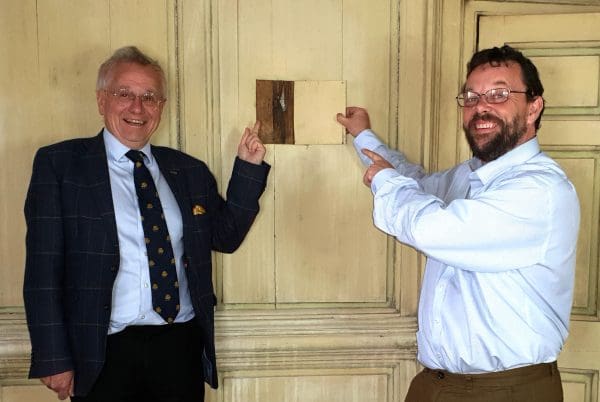
Professor Murray Pittock is Bradley Chair of English Literature and Pro Vice-Principal, University of Glasgow and Dr Murray Cook, Archaeologist Stirling Council.
image by C.Bradley
Musket Ball Hole Discovered: Did Bonnie Prince Charlie Narrowly Escape Assassination in Historic Bannockburn House?
In the halls of Bannockburn House, a Grade A listed historic Scottish landmark, a team of dedicated volunteers have uncovered a rare and fascinating piece of history that could have altered the story of the nation.
Amidst the delicate plaster work and ancient wooden panelling, a musket ball hole has been discovered – a grim reminder of a previously undocumented assassination attempt of the legendary Bonnie Prince Charlie during the tumultuous Jacobite Rising of 1745.
The announcement comes today (23 July), the 279th anniversary of Bonnie Prince Charlie’s arrival on Scottish soil to try to regain the thrones of England, Scotland and Ireland on behalf of his father, James Stuart.
But in January 1746, Prince Charles Edward Stuart, much better known as Bonnie Prince Charlie, took ill and convalesced at Bannockburn House. The large bedroom where he stayed, situated on the first floor’s west wing, is adorned with a delicate plaster frieze of mermaids and has multiple layers of ancient wooden panelling, some of which are hand hewn and painted. The Prince stayed at Bannockburn House at the behest of Sir Hugh Paterson, 3rd Baronet of Bannockburn, when the Jacobite army laid siege of Stirling Castle.
During his time there, the Prince also met Sir Hugh’s niece, Clementina Walkinshaw, who nursed him back to health. A romance bloomed between the pair which carried on for many years after the Rising and they had a daughter, Charlotte, Duchess of Albany.
It was also during this time, according to the house’s oral traditions, that an assassin fired a shot through the bedroom window, missing Bonnie Prince Charlie as he slept and lodged itself in the wall at the head of the bed. For centuries, the existence of this musket ball hole remained a tantalising legend passed down through the generations, its whereabouts shrouded in mystery, until now.
In April this year, the hole was found under a secret panel by volunteer researchers on the House’s History Team. The team was aided by leading Jacobite historian Professor Murray Pittock of the University of Glasgow, and Stirling Council Archaeologist, Dr Murray Cook, who both confirmed the authenticity of the find.
The Trust volunteers had been searching for the hole but had nothing to go on. Then volunteers arranged a visit with an 89-year-old Edinburgh resident, whose aunt was housekeeper for the last owner in residence, who provided the crucial lead. He told History Team Lead, Anne Monaghan and fellow history volunteer Anna Morrison that his aunt had taken great pride in looking after the bullet hole. As soon as they arrived back in Stirling, they contacted Catherine Bradley, lead volunteer researcher for the charity, who met them the next day to investigate the room.
“Anne and I noticed what appeared to be the edge of an inset panel in the wall when cleaning out the room furniture recently for conservation. I suspected that is where it may have been. It is across from a window, now hidden by paneling later put in the room sometime in the 1880s. I just didn’t have the evidence to look until now. It was an exciting moment as I opened it. I carefully lifted the panel and saw the splintered wood and I knew we’d found something very special,” Catherine said. She continued: “Anne asked me what I saw, and I remember giggling and saying, wonderful things! I knew we needed to be very careful not to damage it, so we documented it, covered it back up, and called in the cavalry.”
The volunteers quickly contacted Professor Pittock and Dr Cook for help.
Dr Cook said: “I have visited the bedroom many times over the years and always tried to imagine the Prince and the resulting confusion from the musket fire and sounds of smashing glass alerting everyone to the assassin. However, to see the damage and to touch the spot sent a thrill down my spine – an incredible tangible experience and worth visiting Bannockburn House for this alone.”
Leading historian Professor Pittock, author of Culloden, The Myth of the Jacobite Clans, Jacobitism and many other works, said: “I am pleased to endorse that Bannockburn House Trust has almost certainly discovered forensic evidence of an assassination attempt on Prince Charles in 1746. This is critically important not only for our understanding of the Rising but also for the role the attack may have played in intensifying the relationship between Charles and Clementina Walkinshaw, which led to the birth of his only child.”
Stirling Council Leader, Cllr Chris Kane said: “In the year of Stirling’s 900th anniversary celebrations, it’s remarkable that we’re still unearthing new discoveries about the area’s rich past – but this one is particularly exciting. This astonishing find at Bannockburn House sheds new light on the story of Bonnie Prince Charlie and one of the most tumultuous episodes in Scottish and British history.
“We are proud that Stirling is at the heart of the nation’s history which is showcased at our wide range of world-class attractions and impressive built heritage like Bannockburn House. It’s why people from all across the world are drawn into the area every year and we look forward to welcoming more visitors during our 900th birthday celebrations.”
“After years of hearing the story, it’s been fantastic to finally verify the existence of the musket ball hole,” Anne Monaghan, History Team Lead said.
But this remarkable find is now under threat from severe water ingress caused by the deterioration of the building. The Bannockburn House Trust, who look after the property, is urgently seeking funding to preserve this invaluable piece of Scotland’s past.
The water ingress is from a deteriorating 17th century roof which features hand-hewn wooden slate pegs and carvings on the roof beams. The spectacular ornate plasterwork ceilings are also at risk. Urgent restoration is needed to prevent further damage to the important piece of Scotland’s history. The Trust is launching a major fundraising campaign to proceed with the work.
“Our goal is to restore the building and protect the musket ball hole and other important historical features of Bannockburn House,” said Amanda Monaghan, spokesperson and operations manager for the charity. “This discovery is a tangible link to a significant event in our history, and it’s crucial that we act now to preserve it for future generations.”
The restoration project is estimated to cost millions of pounds, as the building needs to be carefully studied, conserved, and restored to its original condition. The charity also has daily running costs and upkeep. It is launching fundraising bids to raise the necessary aid and is appealing to history enthusiasts, residents, and supporters of heritage preservation to contribute through the donate button on their webpage.
“We invite everyone to join us in this important effort,” added Ms Monaghan. “By restoring the house, we can safeguard this fascinating piece of history and ensure Bannockburn House continues to inspire and educate.” For more information, contact Amanda Monaghan, Operations Manager, Bannockburn House, on 07943 173591 or email amanda.monaghan@bannockburnhouse.scot
You can donate to the Bannockburn House crowdfunding page https://bannockburnhouse.scot/shop-online/donation/donation/
Election Time!
Sir Hugh Paterson, 3rd Baronet & The Elections of 1708-15 By Andrew Colquhoun The loyalties of Sir Hugh Paterson, 3rd Baronet and laird of Bannockburn House, were to the exiled House of Stuart. Politics in early eighteenth-century Scotland was rent by sharp...
March Brings Breezes Loud and Shrill, Stirs the Dancing Daffodil
March Brings Breezes Loud and Shrill, Stirs the Dancing Daffodil The first daffodils are always such a welcome sight, a flower of renewal and rebirth. They are impossible to ignore as the neon-yellow-ness of the bobbing flower pierces through any shrubbery, dreary...

Breaking News: Major National Funding Secures Emergency Works at Bannockburn House
The Rescue Begins Major National Funding Secures Emergency Works at Bannockburn House Good news really does come in threes! Bannockburn House Trust is delighted to announce that three major heritage funders have awarded a combined £325,432 to support urgent...
Winter’s End & Spring’s Beginning
Winter’s End and Spring’s Beginning This seems to have been a long, dreary winter. For us here, in central Scotland, our photos record some snow and the there were some sunny, frosty days but it is hard to recall them as there has been such a long stretch of...
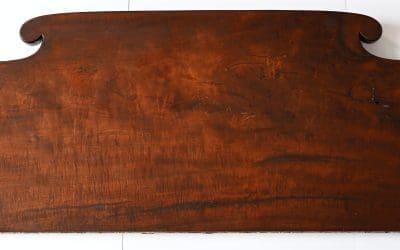
New Find in the Bed Linked to Bonnie Prince Charlie at Bannockburn House Deepens the Assassination Attempt Mystery
SPECIAL ANNOUNCEMENT Bannockburn, Stirling - [4 February 2026] Researchers at Bannockburn House have identified new evidence in the suspected assassination attempt on Bonnie Prince Charlie during his stay in January 1746. A lead ball consistent with 18th century shot,...
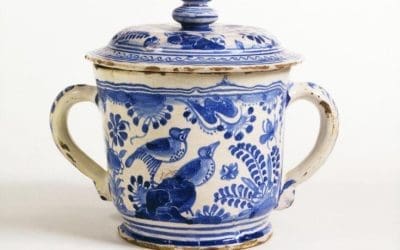
Possets, Princes, & A Proper Bannockburn House Night In…
Possets, Princes, & A Proper Bannockburn House Night In... Winter has always had a way of creeping into the bones. Long before central heating, antibiotics, or the luxury of staying home with a hot water bottle, people in the 17th and 18th centuries still...
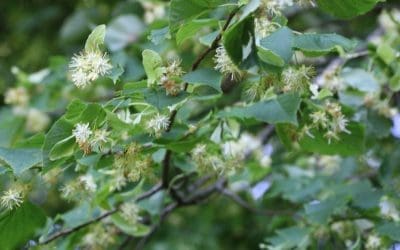
Welcome to National Tree Week. – Ancient Lime Trees
Welcome to National Tree Week. - Ancient Lime Trees - by Margaret Pollock Next time you visit us, see if you can spot our two majestic rows of veteran Lime trees (Tilia x europaea). They create a wind break and originally marked out some of the boundaries of...

Welcome to National Tree Week. – News From Bannockburn House Gardens
Welcome to National Tree Week. The Bannockburn House Trust Garden Blog - by Margaret Pollock Trees are special. They store carbon, replenish oxygen and conserve our soil; they give us food and shade, building materials for our homes and irreplaceable habitats for...

Riches from the Garden – News From Bannockburn House Gardens
Riches from the Garden The Bannockburn House Trust Garden Blog - by Margaret Pollock Summer 2025 is proving to be a bumper year for all our crops. In June and July we had mountains of Blackcurrants. Our harvested onions are huge and now we are picking boxes of...