
March Brings Breezes Loud and Shrill, Stirs the Dancing Daffodil
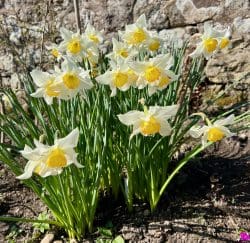
The first daffodils are always such a welcome sight, a flower of renewal and rebirth. They are impossible to ignore as the neon-yellow-ness of the bobbing flower pierces through any shrubbery, dreary garden or woodland as if to say “Spring is coming! Winter has gone – let’s party!”
They are hardy flowers but if they bloom too soon in a cold spring they can become frozen and wilt. The bulbs need the cold of a winter chill to break their dormant period and start growth so it is wise to mulch the planting area in autumn. This insulates the bulbs and prevents them from growing too soon.
Whilst Daffodils are common in most gardens, how many people realise that they are toxic? They belong to the ‘Narcissus’ family, named from the Greek word ‘ narke’ or narcotic. This is a warning of the paralytic numbness and intoxication that will affect anyone who consumes the sticky juices from the leaves, stems or bulb. Thankfully this is an uncommon event and the flowers have well-earned place in most households.
Daffodils are mentioned in Greek mythology as early as 3BC, where they supposedly grew at the entrance to the Underworld. Narcissus was paralysed with love for his own reflection and pined away, after which Narcissi were said to have sprouted from his grave.
Originally flowering in Mediterranean region, the Romans most likely brought them to Britain to enrich their gardens and they traditionally planted them in honour of fallen comrades. Since then, the flowers have spread and diversified over the centuries to more recent times when Victorian plant-breeders developed many of the varieties we now know and love.
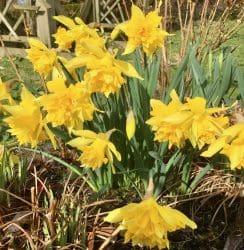
Van Sion Daffodils
Here are some of the heritage varieties growing at Bannockburn House, each the work of a man who dedicated his life to breeding daffodils.
Peter Barr (1826–1909) was born in Govan. As a plant collector he travelled the world but, inspired by the work of John Parkinson (Royal botanist to Charles 1 who created the Great Spanish Double daffodil, ‘Parkinson’s daffodil’, in 1620), Peter’s true love became the daffodil. He established nurseries in London and Suffolk, spending his time among his 4 million bulbs compiling a history of their origins and culture and even after retiring, he continued searching for new varieties to enhance his collection. By the late 19th century there were thousands of varieties of daffodils which he had saved from extinction and we can still enjoy them today, thanks to Mr. Barr, a man known as The Daffodil King.
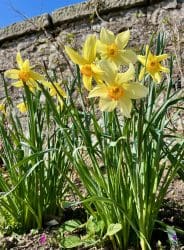
Barri Conspicuus
The Reverend George Herbert Engelheart, (1851-1936 – Mr. Daffodil,) was so busy as a daffodil breeder that it was not unknown for his parishioners to turn up for their Sunday morning church service only to find a note pinned to the door saying ‘No Service today – working with daffodils’.
He was born in Guernsey on April 25th, 1851 and began breeding daffodils in 1880. During his life he created over 700 different varieties including ‘Albatross’, ‘Seagull’, ‘Will Scarlett’, ’White Lady’ and ‘Beersheba’ a flower of the purest white. Many of these blooms won acclamation and awards and during his life he was awarded the Victoria Medal and the Veitch Memorial Medal by the Royal Horticultural Society for services to daffodil breeding. It can take 5 years for a seed to develop into a flowering bulb and then you have to grow it for a few more years to understand it’s strengths and weaknesses before deciding whether you can turn it into a commercial success so it can take several years to create one successful variety, yet he produced 700 different flowers during his career, an amazing achievement! We have quite a few Engelheart varieties growing in our woodlands and garden, here are photos of ‘Will Scarlett’ and ‘White Lady’.
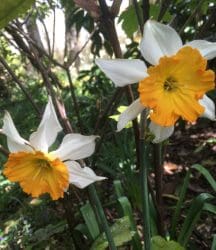
Will Scarlett Daffodil
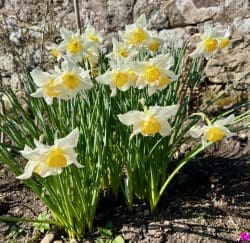
White Lady Daffodil
And finally, the Backhouse family, especially William Backhouse, who were well-known daffodil breeders. In 1865 William bred two stunning daffodils one pure yellow and one yellow with white petals. He named them ‘Emperor’ and ‘Empress’, the ancestors of many of our modern daffodils today. Sarah Dodgson, an English plant breeder and horticulturist, married into the Backhouse family where she carried on the plant breeding tradition. She was the first female recipient of the Royal Horticultural Society’s prestigious Peter Barr Cup and created the first pink-cupped daffodil in 1884. The Backhouse family continues to play a part in daffodil breeding and preserving the history of this flower and you can visit the walled garden at Backhouse Rossie estate in Fife where Scotland’s Daffodil Festival will take place on the 11th and 12th of April. It’s bound to be a dazzling sight with thousands of daffodils on display and delicious cakes and tea. Sounds like just the kind of party daffodils would like to hold to celebrate the departure of winter and the arrival of Spring. Don’t miss it!
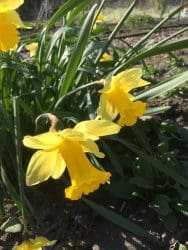
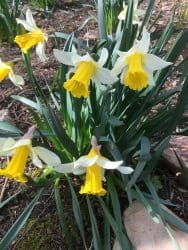
Emperor Daffodil (top) and Empress Daffodil (bottom) bred by Backhouse
Blog Written by Margaret Pollock, Head Gardener & Trustee.
With spring unfolding across the grounds, Bannockburn House will reopen for tours on 18 April. Visit our What’s On page to explore this season’s tours and book your place.
Do you love gardening? Come and join our merry band of volunteer gardeners! Contact us below:
[contact-form to=”volunteer@bannockburnhouse.scot” subject=”Garden Volunteering”][contact-field label=”Name” type=”name” required=”1″][contact-field label=”Email” type=”email” required=”1″][contact-field label=”Message” type=”textarea” required=”1″][/contact-form]