Possets, Princes, & A Proper Bannockburn House Night In…
Winter has always had a way of creeping into the bones. Long before central heating, antibiotics, or the luxury of staying home with a hot water bottle, people in the 17th and 18th centuries still battled the same seasonal miseries we know today. The coughs, chills, fatigue, and that unmistakable feeling of “I’m coming down with something” were as common then as they are today. In a world where medicine was limited and the nights were long, comfort remedies mattered: warming fires, thick blankets, and nourishing food and drink that could soothe as much as it strengthened.
One of the most beloved of these was the posset. In prior centuries, it was a rich spiced curdled mixture of cream and ale, thickened with eggs and sweetened to taste. It’s the kind of restorative treat we can easily imagine being served at Bannockburn House on a cold night, offering a moment of warmth and care in the middle of a hard Scottish winter.
Cream, Spice, and a Little Bit of Magic
If you know Jacobite January at Bannockburn House, you probably know the Clementina & Bonnie Prince Charlie story. The supposed lived reality of two people moving through Bannockburn House in a world of secrecy, loyalty, danger and romance. You’ll know it wasn’t all dramatic decisions and whispered politics… sometimes it was simply warmth, food, and something soothing in a cup.
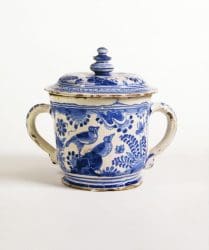
Posset Pot with Cover, 1630-1635. V&A Museum. Accession #C.32&A-1972
Enter the posset. A comfort drink that’s been around for over 600 years. Popular in the 18th-century, it sits somewhere between a hot toddy and a pudding. Frankly, to us it sounds like exactly the sort of thing you’d serve to a weary guest who’d arrived cold, tired, and very much in need of a moment by the fire. A posset wasn’t just a treat, it was care. In the tumultuous Jacobite world, care could be quietly courageous.
A Romance and the Reality Behind It
That’s the thing we sometimes forget when we talk about history. These weren’t characters in a costume drama. They were people. People got sick. People fell in love. People experienced the bitterness of disappointment. People who made choices that felt thrilling in the moment and complicated later. Just like today, relationships could be tender, passionate, hopeful… and they could also become strained, painful, or difficult to survive.
Clementina and Charlie’s story is remembered for its romance, but it also reminds us of something deeply human… love doesn’t always stay sweet. Their relationship eventually gave rise to a later love affair, and to Charles Edward’s only legitimised child, Charlotte. Like so many stories, historical or modern, what followed wasn’t simple. Parenthood changes everything. Pressure changes everything. The weight of politics, reputation, fear, failure, distance, and disappointment can reshape people in ways no one expects at the beginning.
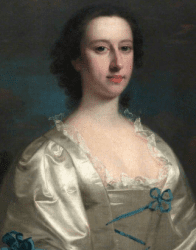
Clementina Walkinshaw [1720-1802]. by Allan Ramsay [1713-1784]. West Highland Museum

Prince Charles Edward Stuart [1720-1788] by Allan Ramsay [1713-1784] Date: 1745, Accession number: PG 3762. Scottish National Portrait Gallery.
A Drink for the Fire…and Flirting
So yes… we’re talking cream, ale, eggs, sugar, nutmeg, and a big dose of history you can taste. And if you believe some early recipe writers, possets weren’t just warming… they were encouraging. In fact, possets had a reputation for being the kind of “restorative” that could revive more than your spirits after a cold night. London physician Thomas Moffett [1553-1604] described a posset as way to increase lust in men. Rich, boozy versions with a certain… reputation.
Some writers of the time suggested the “lustiness” came from the cow through the milk. I suppose the idea being, the cow’s enthusiasm might somehow transfer to the drinker. Whether that was truly the secret ingredient is, well, debateable. But as anyone who has been in a pub at 1 am knows, it definitely has something to do with the alcohol.
Which means, if we’re placing a posset into the Clementina & Charlie story, we’re not only talking comfort and care… we may also be talking about the sort of hospitality that comes with raised eyebrows and the occasional scandal waiting to happen.
And honestly? That’s part of why we love historic food. It isn’t just about the ingredients it’s about the people, the moments, and the little everyday rituals that still feel strangely familiar. If you fancy bringing a bit of that world into your own kitchen (lusty cows, or no!), an 18th century posset is a wonderfully indulgent place to start.
A Posset Fit for a Prince and Your Kitchen!
For our version, we’re turning to a Scottish favourite, Elizabeth Cleland’s A New and Easy Method of Cookery (Edinburgh, 1755). Ms. Cleland had a cooking school for well to do ladies in Luckenbooths Close in Edinburgh. The recipe captures the everyday reality of Georgian Scotland and the kind of food and drink that sat somewhere between comfort, practicality, and a little bit of indulgence. Her posset is exactly the sort of thing you can imagine being served on a bitter winter night.
And while we can’t promise it’ll cure a cold or cause a Jacobite scandal…it’s a delicious way to taste a little slice of the past.
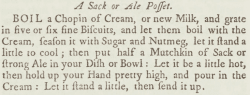
Source: Elizabeth Cleland, A New and Easy Method of Cookery (Edinburgh, 1755).
Elizabeth Cleland’s 1755 Posset Recipe Adapted for 21st Century Kitchens
Ingredients:
1 litre of whipping cream or double/heavy cream or Jersey Gold
1 pint (568ml) of ale or sack wine (see below for authentic choices)
5–6 plain sweet biscuits (digestives, shortbread)
1/4 – 1 cup sugar to taste (or less according to your preference)
1.5 tsp. grated nutmeg (can you actually have too much nutmeg?!)
* Ale choices- to get an authentic 18th century vibe, use an ale that is malty, low hop, and not too strong Similar to a cask style (or Real Ale). Pick sweetish, bready, with gentle bitterness. Avoid modern citrus IPAs, heavily dry-hopped pale ales, sours, or roasty stouts and porters.
** Sack choices – the closest modern wines to an 18th century sack wine are usually dry sherry, like Fino, Amontillado, or Oloroso. You’re aiming for dry, crisp, and slightly yeasty or salty. Slightly rich or nutty is ok in moderation.
Instructions:
1) Make the creamy biscuit base – Pour the cream (or milk) into a saucepan. Crush or finely crumble the biscuits into it. Bring to a gentle simmer (not a rolling boil), stirring constantly. Simmer for 3–5 minutes, until the biscuits soften and the mixture thickens slightly.
2) Sweeten and spice – Stir in sugar and nutmeg. Take it off the heat and let it stand 2–3 minutes to cool slightly. (This matters because if it’s boiling hot, the alcohol can split or curdle too aggressively.)
3) Add the “sack” or ale (the dramatic historic bit) – Pour the ale or sherry into your serving bowl or jug. Warm it slightly if you like (10–15 seconds in a microwave or briefly in a pan). It should be warm, not hot. Now do the old-school technique: pour the creamy mixture from a height (carefully!) into the ale/sherry while stirring gently. That “from on high” pour helps it froth and combine, and gives you the classic posset texture.
*It’s ok if it curdles a little bit!
4) Let it stand – Leave it for 2–5 minutes to settle and thicken.
5) Serve – Ladle into small bowls, cups, or glasses. Finish with a dusting of nutmeg. It can be served from a small punch bowl to individual bowls or in glasses.
If you want the full Clementina & Charlie experience the stories, atmosphere, and Bannockburn House vibes, don’t forget to grab your event tickets. They’re going fast, and we’d love to see you there!
Book Your Tickets Here!
If you’ve enjoyed this little taste of the past, please consider supporting our work — Bannockburn House is one of the UK’s largest community-led heritage conservation and restoration projects, and every donation helps us protect this remarkable place for future generations. Click Here to Donate!
Post by Conservation Trustee, Dr. Catherine Bradley