From Discovery to Preservation
Hidden beneath floorboards, tucked away in storage, or too fragile to handle, the artefacts of Bannockburn House each hold a piece of the story. Now, through our new digital archive, these objects from a 1630s wax seal to Scotland’s Oldest Lemon can be explored by anyone, anywhere. As valuable as initial discoveries can be, the artefacts found lose their value without proper conservation to prevent any deterioration. Conservation ensures the items in our collection remain available for viewing and research for years to come. An important part of the conservation process is entering the artefacts into an archive to track important context – such as what an object is, where it was found, and where it is stored.
Archives can serve as windows to the past – they help us discover and access documents and artefacts that help with research, understanding historical context, and helping people feel more connected to history. However, there is usually the barrier of needing to visit an archive in person to access those tangible pieces of history. By making an archive digital, that barrier is removed and the archive becomes widely accessible.
Preserving Artefacts in the Digital Age
Digital copies of valuable artifacts reduce the need for handling, create a permanent record in case of deterioration or natural disaster, and build a record of important data to track conservation efforts. When combined, these practices create an accessible and valuable digital environment where the public and academic researchers alike can learn about a cultural heritage site or event through historical artifacts.

These items are valuable in telling the story of Bannockburn House but are not yet accessible through an on-site display. This gap sparked the idea of creating a digital archive for Bannockburn House. The Bannockburn House Trust (BHT) is an organization for the community; yet much of the tangible history has been tucked away in storage. It was important to us to find a way to make Bannockburn House available to whoever may be interested and share the items.
By making these artefacts available online through photos and digital scans Bannockburn House can come to anyone, anywhere. The archive also creates a permanent record of each object as it was found — preserving colours, fine details, and context that may be lost to time. As the house undergoes restoration, the archive ensures this history remains open to the public throughout.
Bringing Bannockburn House to Everyone
Creating a digital archive for Bannockburn House was no small undertaking. Before any digitization or curation could begin, the BHT had to determine what artefacts were most important to digitize. The team prioritized artefacts from the Jacobean era of the House in the 1700s, pieces of medieval pottery, and wallpaper samples at risk of deteriorating. The Jacobean and medieval pieces were selected for their age and role in dating the house, while the wallpaper required urgent digitization to preserve fading pigments and fine detail before further deterioration.
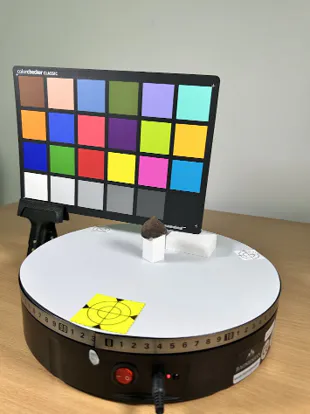
The digitization process was done in a partnership between the BHT, Johns Hopkins University, Robert Gordon University, and the St. Andrews Society of Washington, DC. Artefacts were captured using a combination of laser scanning and photogrammetry, digital photography. Each object was photographed alongside a colour reference scale to ensure accuracy.
These photographs and digital scans were brought together and curated using CollectiveAccess, a free and customizable archival software, to create a publicly accessible archive. The collection is a living resource and as research continues, we’ll be adding richer context for each object; including its age, location of discovery, and place in the broader story of Bannockburn House.
A Living Archive for the Future
The archive will allow you to take a closer look at some of the featured objects in our collection, including the Bonnie Prince Charlie headboard, Scotland’s Oldest Lemon, and a portion of a wax seal dating back to the 1630s! The wax seal fragment is one of the most valuable objects in our collections and was discovered within the floorboards on the second floor, in the room above the Bonnie Prince Charlie Room. Although you can’t clearly see the fine details in the digital photograph (left), a photogrammetric rendering (right) shows far more detail of the texture.
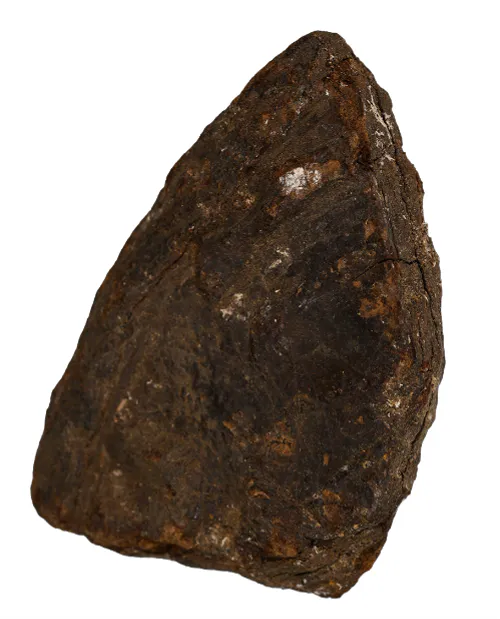

This wax seal is only one example of the benefits of digitization and digitally preserving collections of artefacts. As we continue with archaeological investigations, we will add to the archive to ensure the fascinating history of Bannockburn House is shared not only with our local community, but with a global audience. Keep an eye out in the coming days for a beta version of the website. We hope our digital archive will help you feel more connected to Bannockburn House.
Want to know more about the conservation and restoration of Bannockburn House? Join us for a behind the scenes look at the project at our Behind the Restoration: Meet the Architect & Meet the Engineer Event!
Many thanks to The St. Andrew’s Society of Washington D.C. for funding Katharine’s work to establish our digital archive.

Blog By:
Katharine Rubinetti, Digital Curation